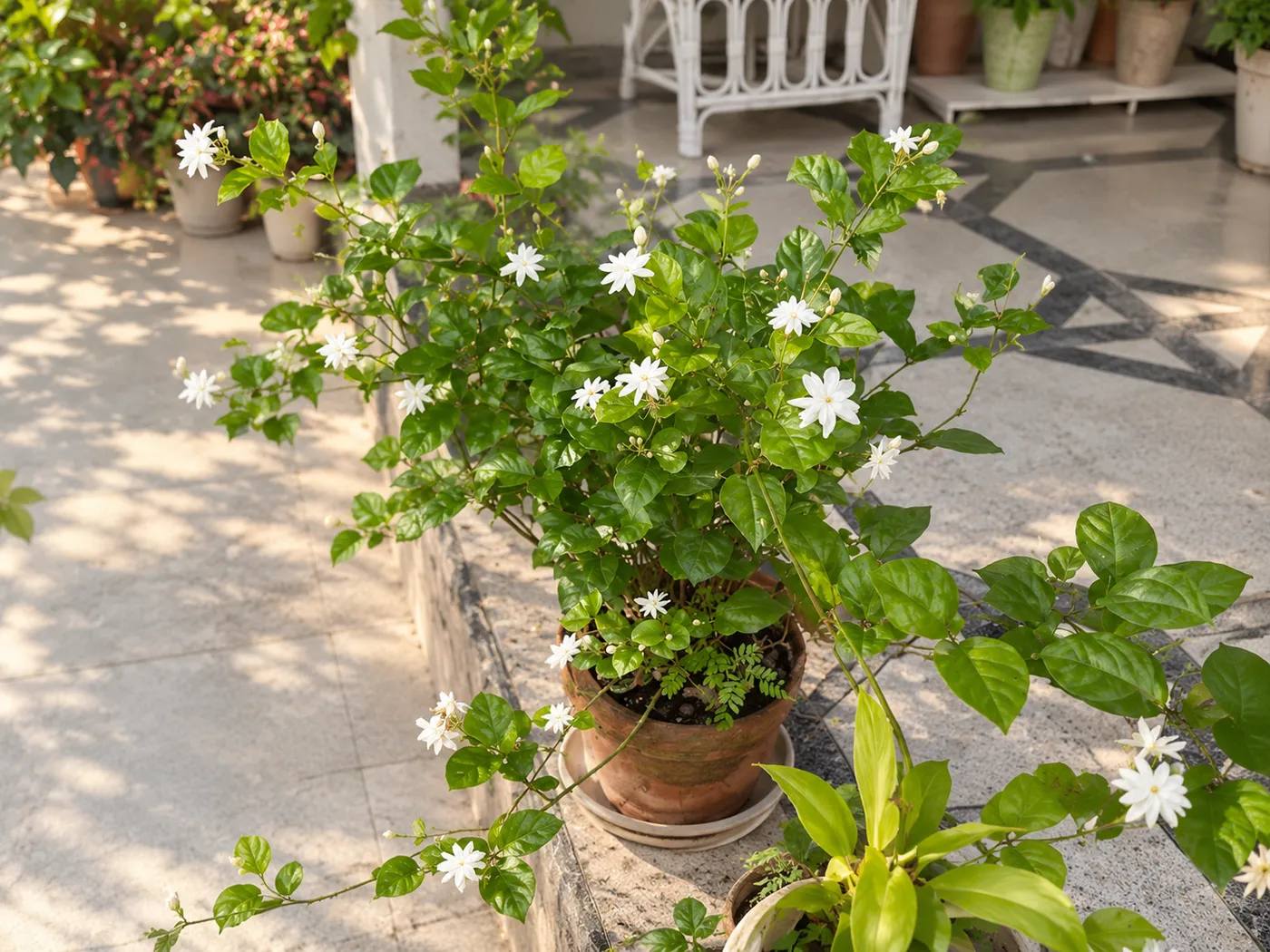
Mogra through the warmer months
When to prune, feed and care for your mogra to help it grow and bloom well.
- Time
- 4 minutes
- Topic
- Care guides
Mogra, the Arabian jasmine, flowers on a balcony from March to June, and at its best it fills the whole flat with scent in the evening. Whether you get a handful of buds or a steady crop every day depends mostly on what you do in February and March. The plant needs full sun, one hard prune, steady feeding and regular pinching. None of it is complicated, but the timing matters.
Give it full sun
Mogra needs at least six hours of direct sun to flower well. A south or west-facing railing is ideal; it is one of the few plants that enjoys the west sun of April and May, provided it is watered. In shade it grows a leafy tangle with very few buds. Use a pot at least 12 inches wide with good drainage, and a mix of garden soil, compost and cocopeat. Check the roots every two years and move up one size if they are circling.
Water when the top inch of mix is dry. In April and May that is often every day, so check it every evening. Water at the base in the morning, not over the flowers. Through the monsoon it needs far less, and in a Delhi winter, water once a week at most while the plant rests and sheds some of its leaves.
Prune in February
Mogra flowers on new growth. In early February, once the Delhi cold has passed or the nights in Mumbai and Bengaluru have started to warm, cut the whole plant back by a third to a half. Remove dead, crossing and weak stems completely, and cut the rest just above a leaf node. It will look bare for a few weeks. That is the point: every cut makes two or three new shoots, and each of those will carry flowers.

Feeding for flowers
After pruning, top dress with two handfuls of well-rotted compost or vermicompost and water it in. From March, when the new shoots are a few inches long, feed every two to three weeks with a bloom fertiliser that is higher in phosphorus and potassium than in nitrogen. Avoid urea and heavy doses of fresh manure, which produce leaves instead of buds. Stop feeding when the monsoon arrives and flowering tails off.
Keep an eye out for pests while the new growth is soft. Mealybug and whitefly both like mogra's young shoots in spring. Check under the leaves each time you pinch, and if you find them, spray neem oil in the evening every five to seven days until they are gone. In our experience, well-fed plants in full sun are troubled far less.
Pinching and picking
When the new shoots have three or four pairs of leaves, pinch out the tip of each one with your fingers. Each pinch makes the shoot branch, and more branches mean more flower clusters. Do this through March. Once buds form, pick every day in the late afternoon, when the buds are fully white and plump but still closed; they open in the evening. Regular picking keeps the plant setting new buds. On a plant that has been pruned and pinched well, a single pot can give a small bowlful of buds on most evenings in May.

In peak summer a mogra in a 12-inch pot may need water every day. If buds drop before they open, the pot has dried out.