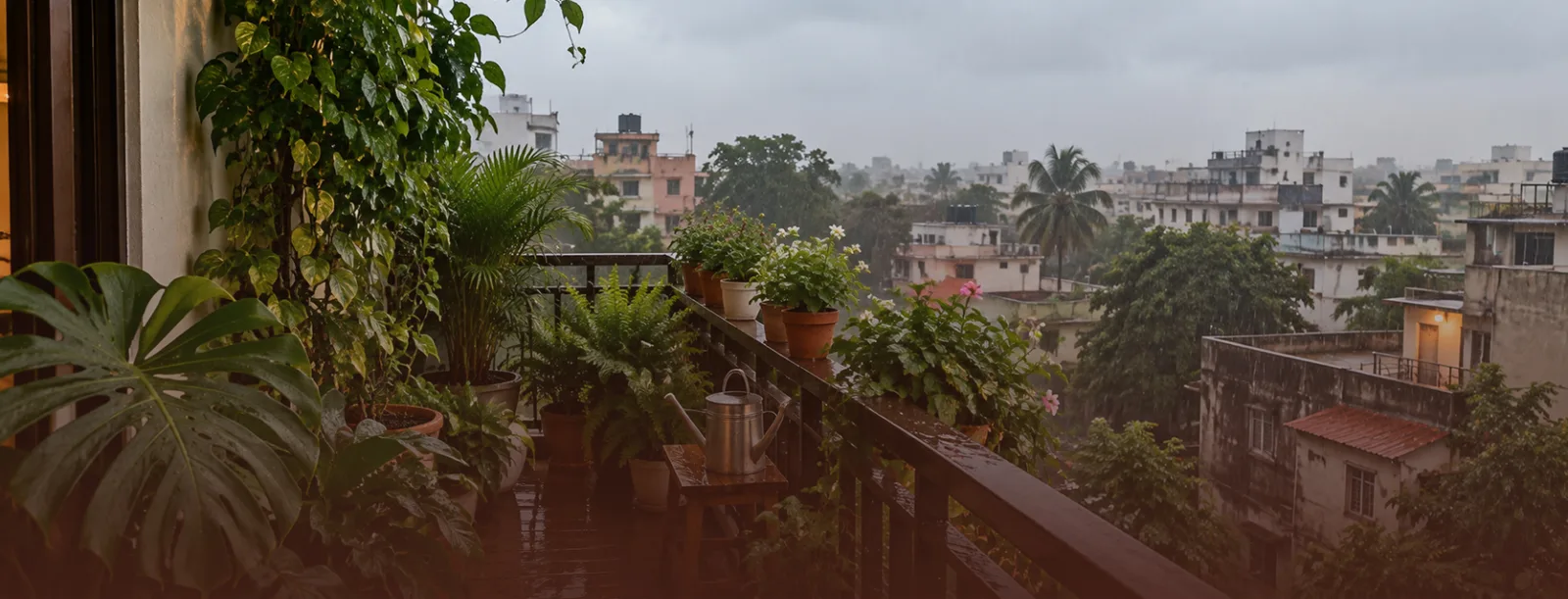
Your balcony needs a little extra care during monsoons.
Heavy rain, strong winds and wet soil can be hard on your plants. Here’s what to watch for and what to do.
- Time
- 8 minutes
- Topic
- Seasonal
Rain is good for plants. Too much rain, trapped water and high humidity? Not always.
Monsoon can make a balcony look its best. Leaves appear greener, plants put out fresh growth and everything feels a little more alive.
But the season also changes what your plants need.
The biggest mistake is continuing with your summer routine when the weather has already changed.
1. Water less, check more
During monsoon, soil usually stays moist for longer. That means plants that needed frequent watering in summer may suddenly need much less.
Before watering, push your finger 2–3 cm into the soil. If it still feels damp, skip watering and check again later.
The goal is simple: don’t add water just because it’s part of your routine.
2. Make sure every planter can drain
Heavy rain can quickly turn a poorly drained planter into a container full of water.
Check that drainage holes aren’t blocked by compacted soil, roots or debris. Empty saucers and trays after prolonged rain, and don’t allow pots to sit in standing water.
This is particularly important because EcoLiving uses planters as a fundamental part of balcony planting and design, with different planter families forming part of the overall outdoor system.
3. Watch for yellow leaves
A yellow leaf doesn’t always mean a thirsty plant.
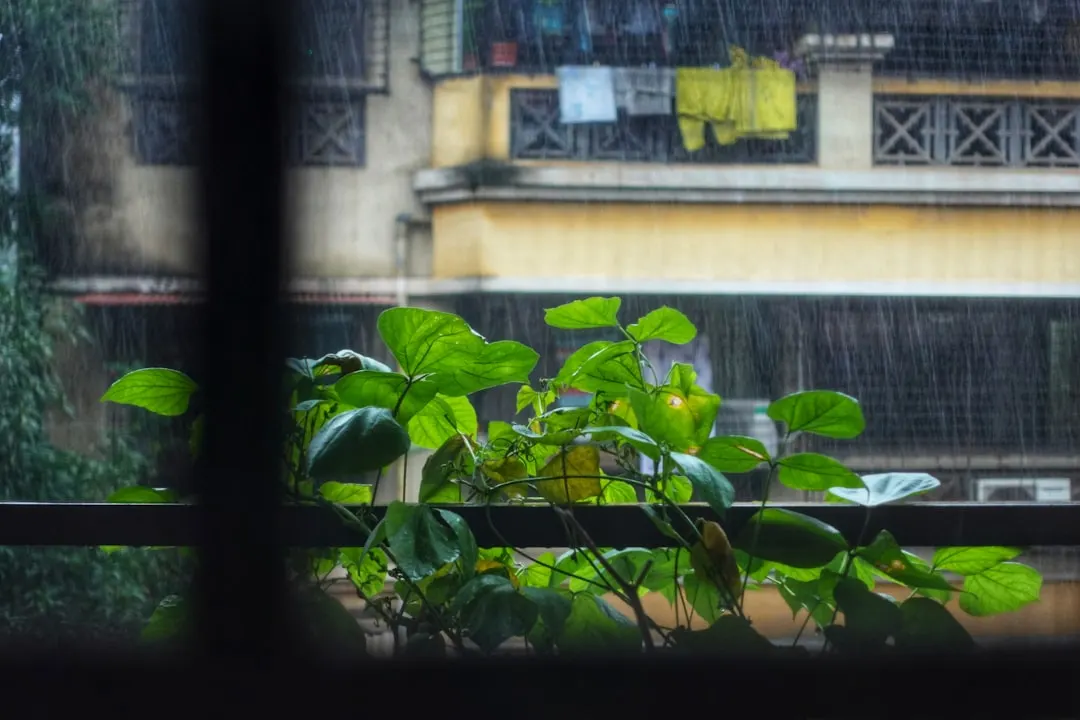
During wet weather, yellowing can be a sign that the roots have remained wet for too long. Before reaching for the watering can, check the soil.
If it is consistently soggy, look at drainage, reduce watering and make sure the plant isn’t sitting where rainwater continuously collects.
4. Give plants some breathing room
Monsoon brings higher humidity, and tightly packed foliage can stay damp for long periods.
Remove dead or damaged leaves and avoid letting plants become unnecessarily crowded. Better airflow helps foliage dry and makes it easier to notice problems before they spread.
Think lush, not congested.
5. Keep an eye out for pests and fungal problems
Warm, humid conditions can encourage pests and plant diseases.
Every few days, take a quick look underneath leaves, around new growth and near the soil. Watch for unusual spots, discolouration, insects or leaves deteriorating unusually quickly.
Early attention is much easier than trying to rescue an entire planter later.
6. Check the balcony too
Monsoon care isn’t only about plants.
Clear fallen leaves from drains. Make sure water isn’t collecting underneath large planters. Check outdoor furniture and décor after periods of heavy rain, and reposition anything that isn’t designed for prolonged exposure.
A balcony is an ecosystem of plants, planters, furniture, lighting, flooring and drainage — so caring for the space means looking beyond individual pots. EcoLiving’s approach similarly treats these elements as parts of one designed outdoor environment rather than isolated additions.
The monsoon rule
Less watering. Better drainage. More observation.
Your balcony doesn’t need dramatically more work during monsoon. It just needs a slightly different kind of care.
Finished this lesson?
Marking it done unlocks lesson 2 and updates your path progress.
 Up next, lesson 2Fix drainage first5 min read