Spotting mealybug early
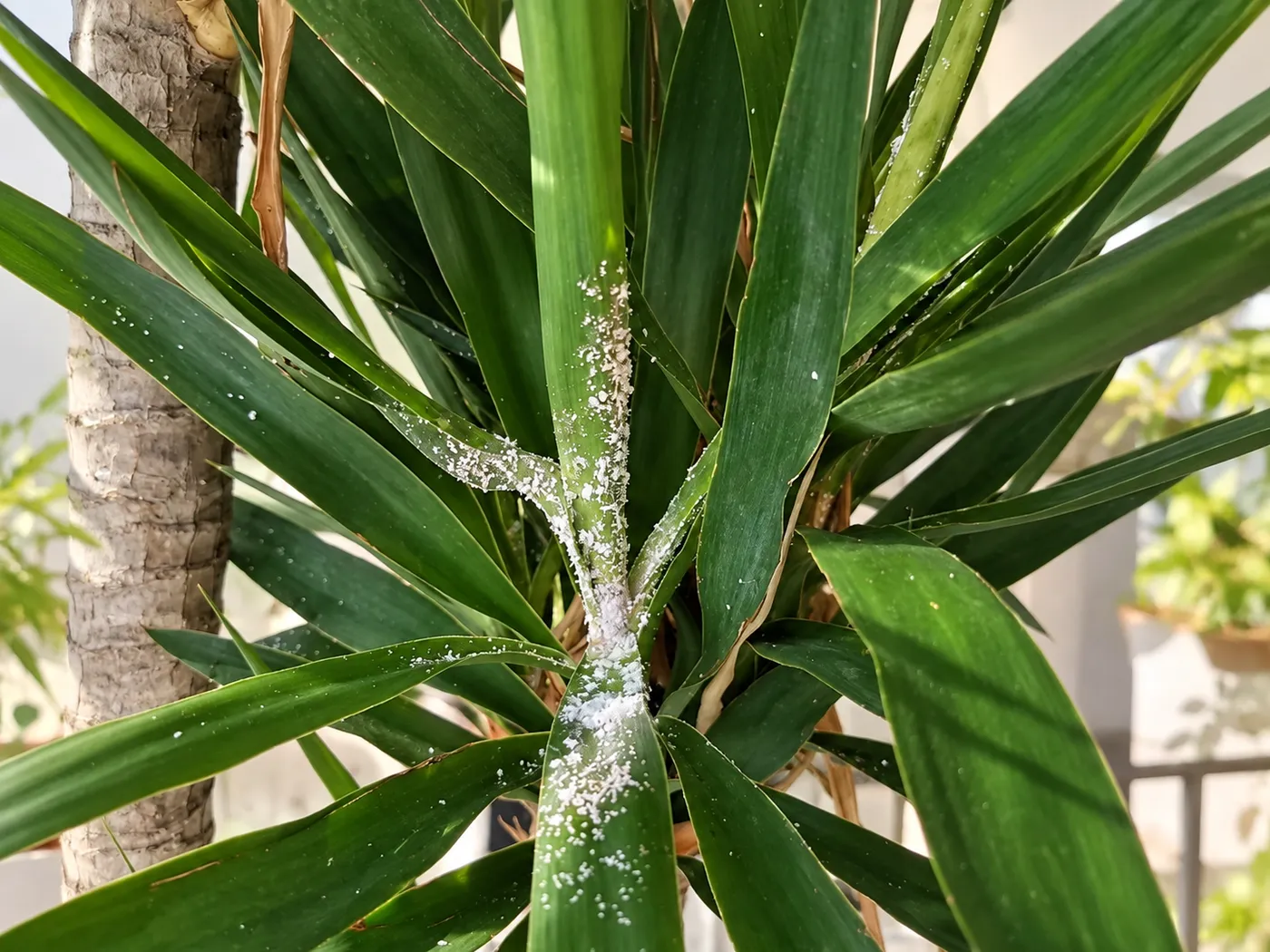
The white fluff under the frond is not dust.
- Time
- 4 minutes
- Topic
- Care guides
On care visits, the first sign of mealybug we find is almost always something the owner has seen and dismissed. A little white fluff where a frond meets the stem. A cottony speck under a leaf. It looks like dust or a scrap of cobweb. It is not. It is a colony of small, soft-bodied insects in a waxy coat, and if you catch it at that stage it takes ten minutes to deal with. Miss it for a month and you may lose the plant.
What you are looking for
Mealybugs are about 2 to 4 mm long, oval, and covered in a white, powdery wax. They sit still, in clusters, and they like hidden places: the underside of fronds, the joints where leaves meet stems, the folds of new growth, and the crown of a palm. They feed on sap, which weakens the plant and makes new leaves come out small, pale or twisted.
The other clues come from what they leave behind. They excrete a sticky, sugary liquid called honeydew. Leaves below the colony feel tacky, and a thin black film of sooty mould may grow on them. A line of ants climbing the stem is often the giveaway, because ants farm mealybugs for that honeydew and carry them from plant to plant.
A five-minute weekly check
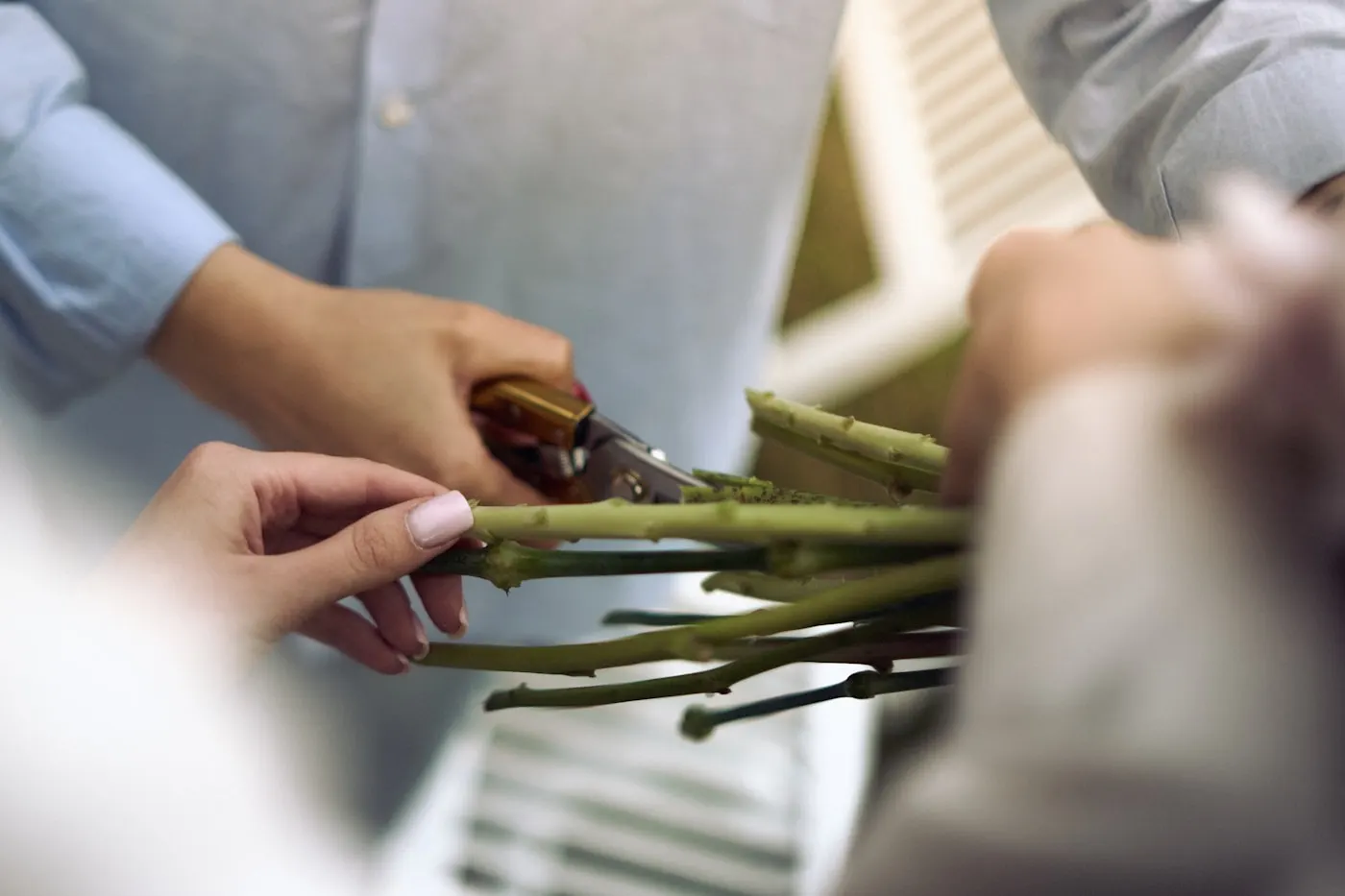
Pick one day a week, ideally the day you water, and look properly at each plant. Turn fronds over. Look into the crown of palms and the leaf joints of croton, hibiscus, jade and money plant, which are the ones we find it on most. Run a finger over lower leaves for stickiness. New plants deserve the closest look: keep anything just bought from a nursery apart from the rest for two weeks, because that is how most infestations arrive.
Weekly mealybug check
6 thingsDealing with it early
Move the plant away from the others first. Dip a cotton bud in rubbing alcohol and touch each cluster; the alcohol dissolves the waxy coat and kills them on contact. Wipe the leaf afterwards with a damp cloth. Then spray the whole plant, especially undersides and joints, with neem oil: 5 ml of cold-pressed neem oil and two or three drops of liquid soap in a litre of water, shaken well and used the same day.
Spray neem in the evening, never in midday sun. Oil on a leaf in strong light scorches it, and the evening gives the spray time to work before it dries.
Repeat the neem spray every five to seven days for at least three weeks. Mealybug eggs are protected under the wax, and a single round kills the adults but not the next generation. Keep checking the plant for a month after the last spray before putting it back with the others. In the monsoon, when humid air favours them, check your other plants more often too.
When it has gone too far
If white clusters are on most stems, new growth has stopped, and the leaves are yellow and sticky, cleaning by hand will not keep up. Cut away the worst stems, spray, and ask for a care visit. Check the roots as well: root mealybug shows as white, cottony patches on the root ball when you slide the plant out. For a small plant that is badly infested, replacing it is often kinder to the rest of the balcony than months of treatment.