Leaves are how a plant tells you something is wrong, but the same sign can have opposite causes. A drooping plant may be thirsty, or its roots may be rotting in wet mix. Guess wrong and the fix makes it worse. Before you change anything, look at which leaves are affected, where on the leaf the damage is, and, most important of all, how wet the mix is. Those three answers settle most cases.
Yellow leaves
One or two of the oldest, lowest leaves turning yellow and dropping, while new growth looks healthy, is normal ageing. Remove them and move on. Many leaves yellowing at once, starting low and working up, with mix that is still damp days after watering, means overwatering. It is the commonest cause we see. If the pot is light and the mix is dry and pulling away from the sides, it is the opposite: underwatering, often with crisp edges as well.
Pale yellow new leaves with green veins usually mean the plant cannot take up iron, which is common in pots watered with hard, alkaline water; a fresh top dressing of compost and a monthly flush help. An overall pale, washed-out plant that has not been fed in months is often short of nitrogen. A plant that yellows and stretches toward the light is simply not getting enough of it.

Brown tips, edges and patches
Brown, crisp tips and edges on otherwise green leaves usually mean dry air, salt build-up from fertiliser or hard water, or a pot that dries out too far between waterings. Palms, ferns and peace lilies show this first. Flush the pot with plenty of plain water, group plants to raise humidity, and trim the brown tips with clean scissors, following the leaf's natural shape.
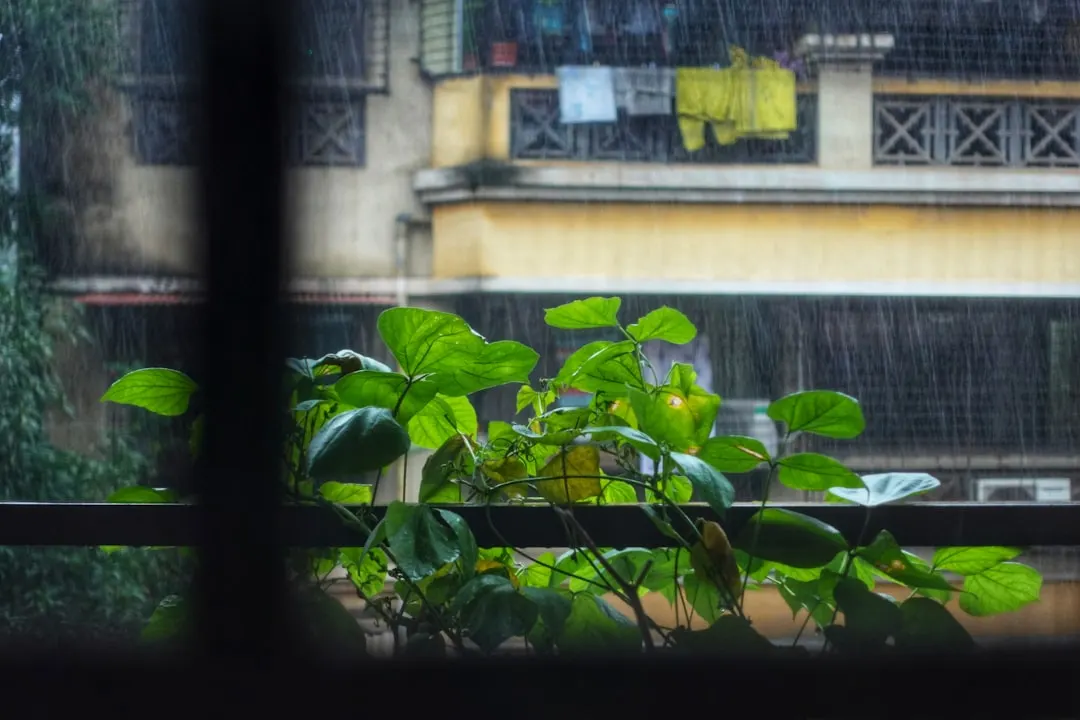
Dry, bleached or brown patches on the side of the plant facing the sun are sunburn, common after a plant is moved into a sunnier spot in April. Move it back, and cut away the worst leaves once new ones appear. Brown or black spots with a yellow ring around them, spreading from leaf to leaf, point to a fungal or bacterial leaf spot, especially in the monsoon: remove affected leaves, stop wetting the foliage and give the plant more air. Brown, limp patches after a cold Delhi night are cold damage.
Drooping
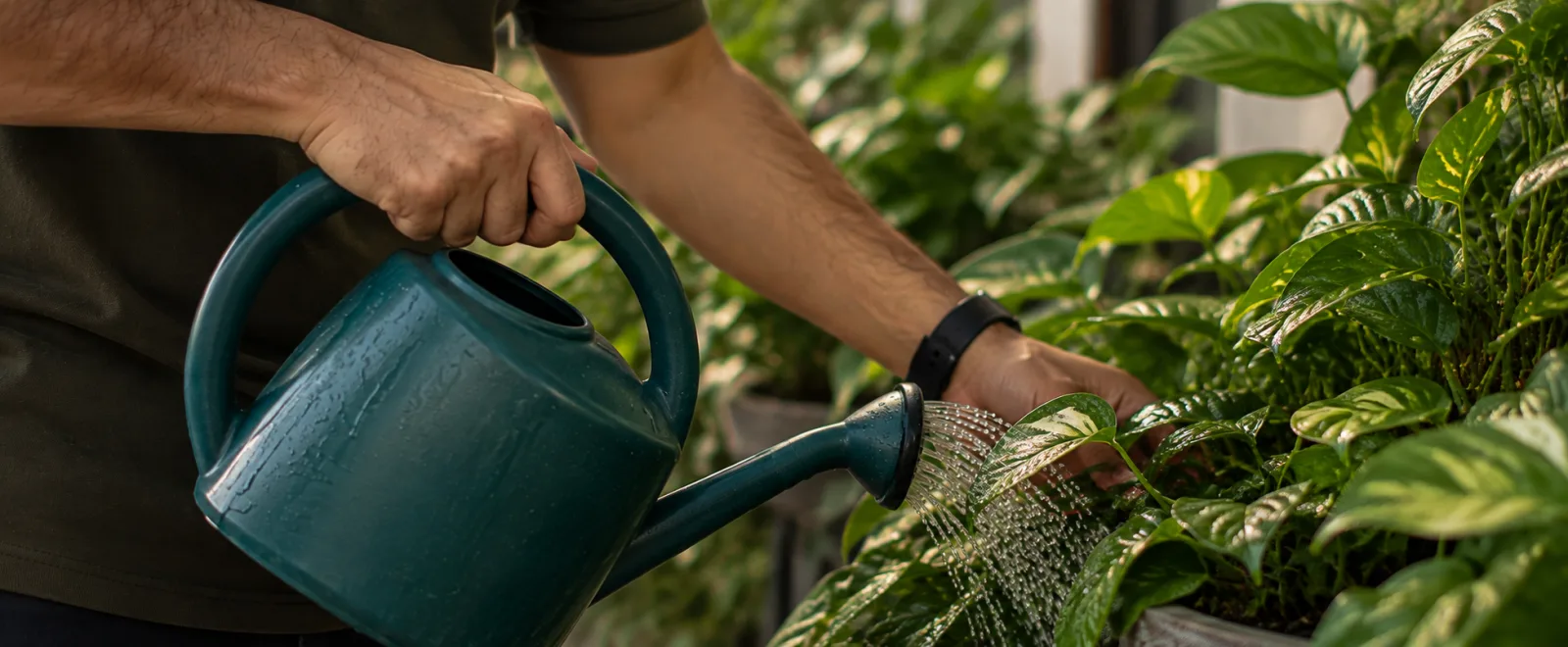
Feel the mix first. Drooping with dry mix is thirst: give a slow, thorough soak, and most plants stand up again within a few hours. Drooping with wet mix is more serious. Roots that sit in water rot, and rotten roots cannot take up water, so the plant wilts in a wet pot. Stop watering, make sure the drainage holes are clear, and if it has not recovered in a week, slide it out and look: healthy roots are firm and pale, rotten ones are brown, soft and smell sour.
A plant that droops in the afternoon heat and recovers by evening is protecting itself, not dying. Do not water it at 3 pm if the mix is still damp; move it out of afternoon sun instead. Drooping in the first week or two after repotting or a move is shock, and needs patience, not more water.
When in doubt, check the mix, not the leaves. Most plants we are asked to rescue are overwatered, and adding more water to a drooping plant is the most common way they are lost.