A west-facing balcony gets gentle light all morning and then, from early afternoon until sunset, the full force of the sun at a low angle straight into the space. By May in Delhi or Bengaluru the floor and back wall are radiating heat well into the evening. Most foliage plants sold for balconies scorch within a fortnight. These six do not. They are the plants we put on west-facing balconies again and again.
Why the afternoon is the problem
Morning sun arrives when the air is cool. Afternoon sun arrives when the air is already at its hottest, and on a west balcony it comes in low, under the ceiling, onto the plants, the tiles and the back wall. The wall stores that heat and gives it back after dark, so the plants never properly cool down. Thin, broad leaves like those of a peace lily or calathea lose water faster than the roots can replace it, and brown at the edges.
The plants that cope share a few traits: thick or waxy leaves, a way of storing water, or origins in hot, dry places. All of them also want sharp drainage, because heat plus soggy soil is how roots cook. Several of the six actually flower better for the stress. What they will not forgive is a small pot, a blocked drainage hole, or being moved from deep shade into full sun overnight.
Four that flower through the heat
Bougainvillea is the obvious first choice. It flowers hardest in strong sun with slightly dry soil, and it will cover a railing within a season or two. Tecoma, or yellow bells, is the second: fast, upright and in flower for much of the year, with yellow or orange trumpets. Both need a firm trim after each flush to stay compact.
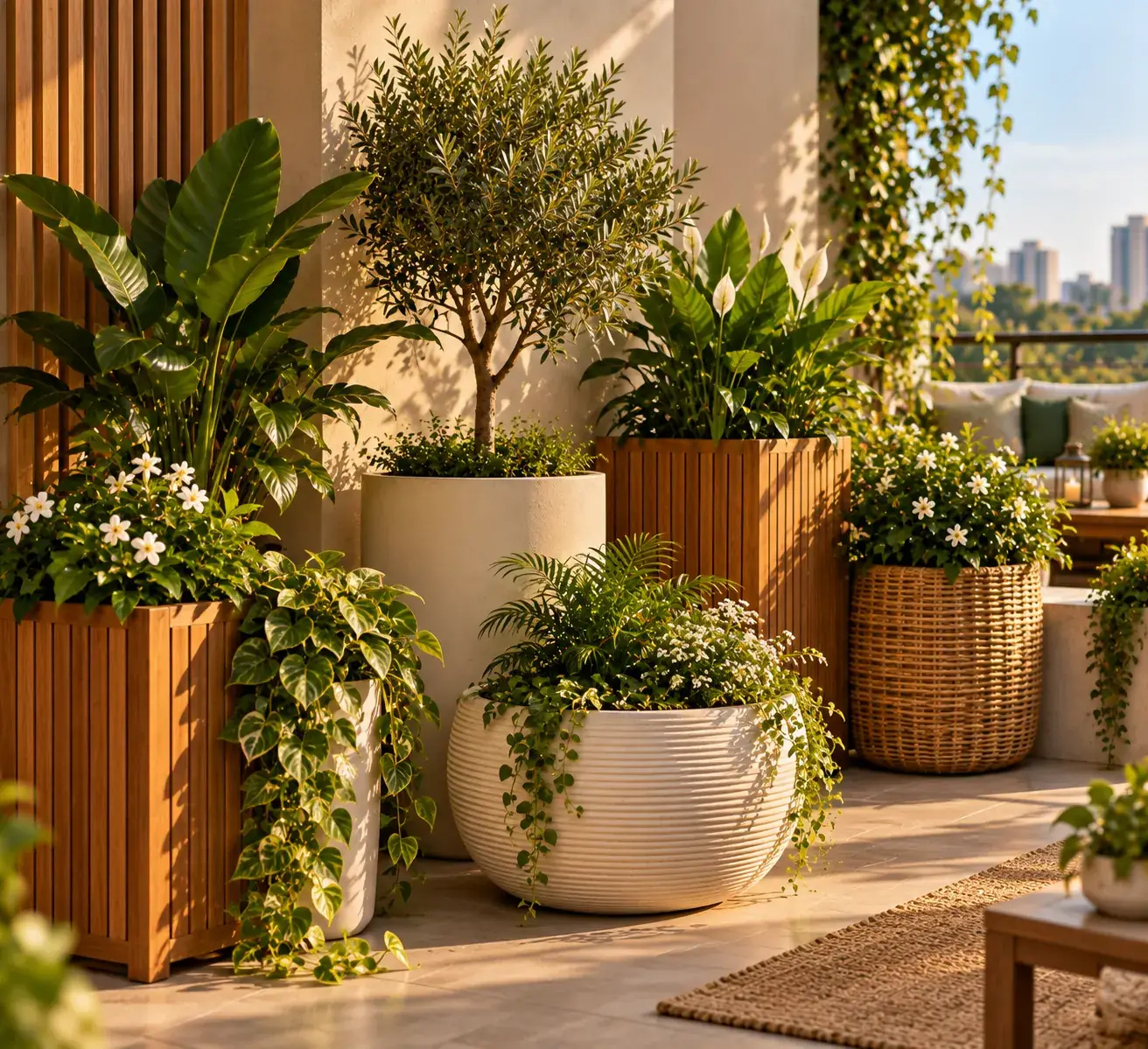
Hibiscus takes full sun happily as long as it gets water. In May it may need watering morning and evening, so give it a pot of 12 inches or more. Portulaca, the moss rose or nine o'clock flower, is the low filler: it spills over pot edges, opens its flowers in the brightest part of the day, and roots from almost any piece of stem.
Two succulents that store their own water
Adenium, the desert rose, is built for this. Its swollen base stores water, it flowers in pink, red and white through the hottest months, and it fails mainly when it is overwatered. Grow it in terracotta with a gritty mix and water only when the pot feels light. Jade handles afternoon sun well once it is used to it. Its leaf edges turn red, which is a stress colour, not damage. Like adenium, it wants terracotta, a free-draining mix and very little water in the monsoon. In a Delhi winter, water both sparingly; cold, wet soil does them more harm than sun ever did.
A plant moved from a nursery's shade net straight into west sun will scorch in the first week. Give it a fortnight of morning sun or partial shade before the full exposure.
Getting them through May
Even these six need help in the worst weeks. Water early in the morning, not in the afternoon when much of it evaporates off hot soil. Mulch the top of each pot with an inch of cocopeat or dry leaves. Use pots of 12 inches and up, because small pots overheat and dry out within hours. Pale planters stay cooler than black nursery bags. If the heat is extreme for a week, a strip of green shade net along the railing for the afternoon hours takes the edge off without cutting the light the plants need.