A planter can completely change how a plant looks. More importantly, it can change how well that plant grows.
The wrong pot can keep roots too wet, dry them out too quickly, restrict growth or simply become impractical for the space. The good news is that choosing the right one doesn’t require much horticultural knowledge.
You really need to think about three things: size, material and drainage.
1. Start with the right size
It’s tempting to choose a planter based on how it looks in the space. Start with the plant instead.
As a general rule, when repotting, choose a pot slightly larger than the plant’s current root ball or nursery pot rather than jumping several sizes at once.
Why? A pot that is too small restricts roots and dries out quickly. But a pot that is unnecessarily large can hold more wet soil than the plant can use, increasing the risk of root problems.
A simple way to think about it
5 thingsAnd remember that plants grow. If you are designing a balcony or terrace, think about what the plant will look like a year from now, not only on installation day.
2. Choose the material for the space
There is no single “best” planter material. The right choice depends on where the planter will sit, how exposed it is and how often you expect to move it.
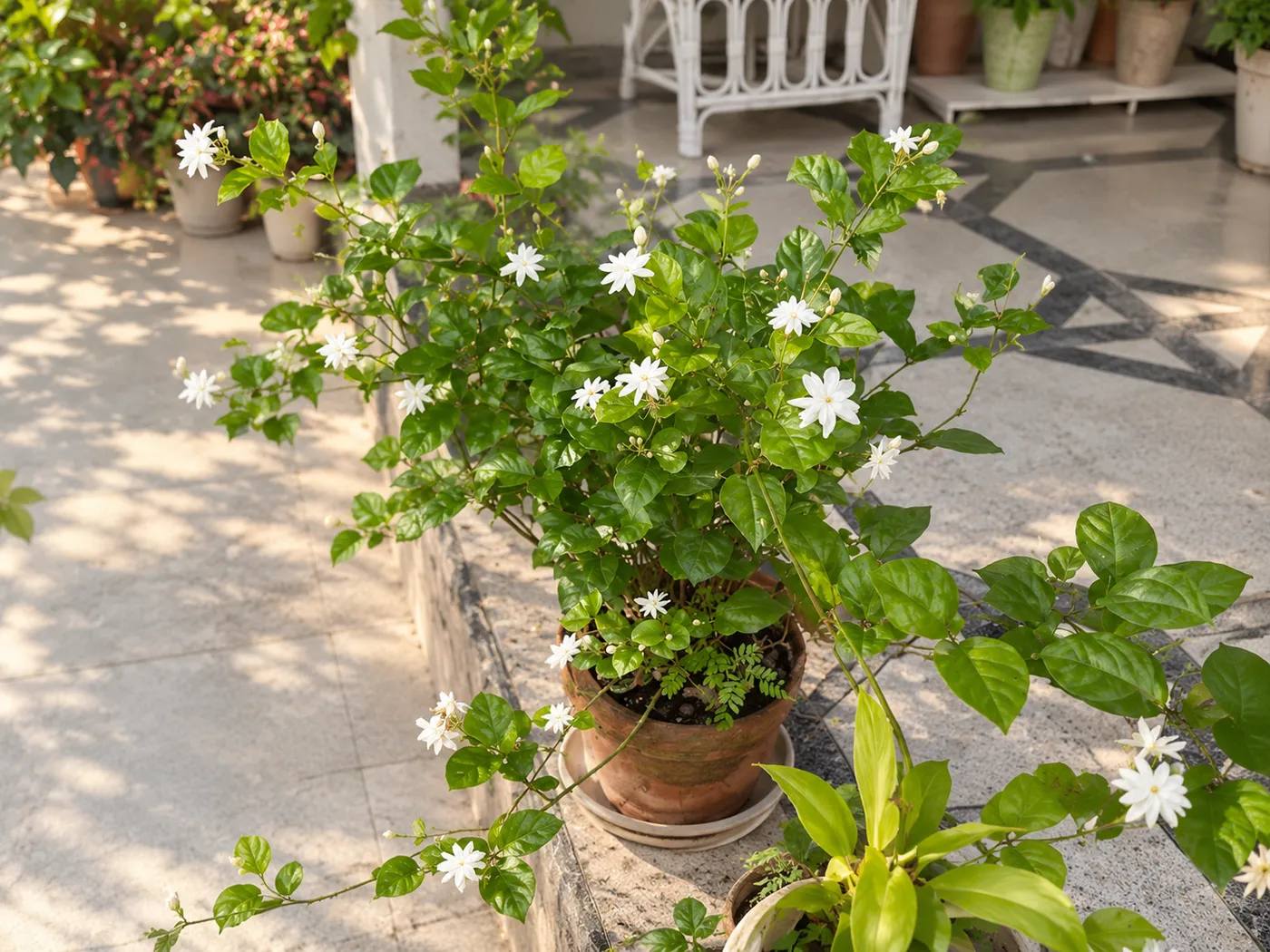
Terracotta has a warm, natural character and its porous surface allows moisture to evaporate relatively quickly. That can be useful for plants that dislike constantly wet soil, although it also means more frequent watering in hot weather.
Ceramic planters can bring colour and finish to balconies and indoor spaces. Glazed varieties retain moisture better than unglazed terracotta, but larger ceramic pots can become quite heavy.
FRP and fibre planters are particularly useful when you want larger formats without excessive weight. They work well in contemporary balconies and terraces where planters form part of the overall design. Fibre planters are available in a wide range of shapes and sizes; the planter catalogue used by EcoLiving also highlights qualities such as light weight, indoor/outdoor suitability and UV resistance.
Metal planters create a clean architectural look and work especially well in modern outdoor spaces. Aluminium, galvanised zinc and corten are among the options available for landscape applications. Consider heat exposure, lining and corrosion resistance when choosing them for outdoor use.
For balconies in particular, weight matters. A beautiful planter that is difficult to move, clean around or reposition can quickly become inconvenient.
3. Never overlook drainage
If there is one thing to check before buying a pot, check the bottom. Does excess water have somewhere to go?
Most plants do not want their roots sitting continuously in water. A planter should therefore have adequate drainage holes, paired with a potting mix that drains appropriately for the plant.
For balconies and indoor areas, drainage also needs to work for the space. Use trays, saucers or suitable planter systems where necessary so that watering your plants does not mean staining the floor or sending water onto the balcony below.
And avoid the common fix of simply adding stones to the bottom of a pot with no drainage hole. A drainage layer is not a substitute for allowing excess water to escape.
What about the soil?
The planter is only half the equation.
Garden soil is usually not ideal for containers. In a pot, plants generally need a well-structured potting mix that can hold enough moisture while still allowing air around the roots and excess water to drain.
The exact mix should depend on the plant. Succulents need a much faster-draining medium than moisture-loving tropical foliage, for example.
So when you choose a planter, think of the combination:
Plant + planter + potting mix + drainage.
Getting all four right is far more important than choosing a pot purely because it matches the furniture.
One last thing: think about the whole space
A collection of individually beautiful pots doesn’t always make a beautiful balcony.
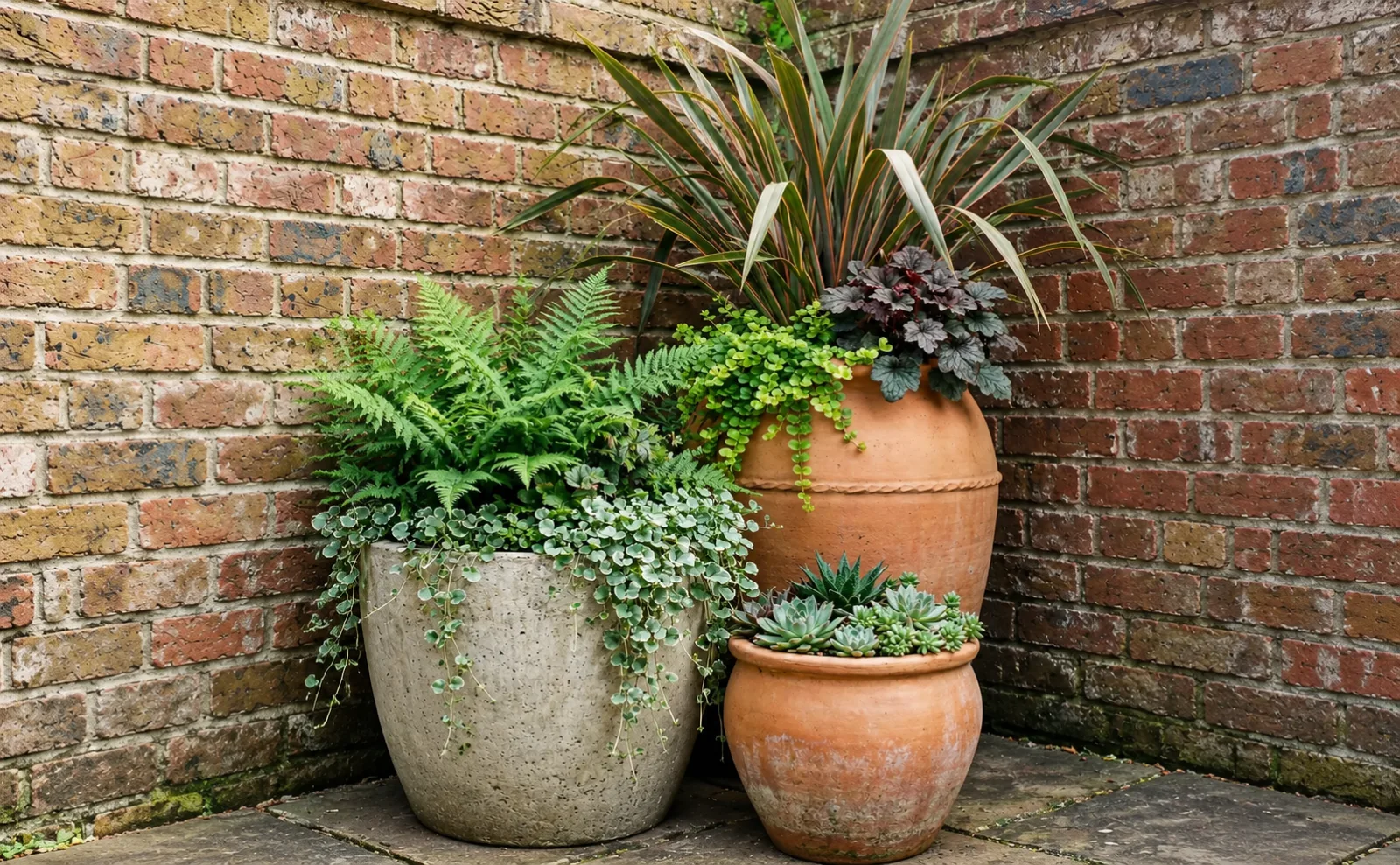
Try repeating a material, finish or colour across several planters and varying their heights and proportions instead. A tall planter can anchor a corner, a long rectangular planter can soften a railing, and smaller pots can add layers around the larger plants.
EcoLiving’s balcony concepts use planters as part of the wider composition alongside planting, lighting, furniture and flooring rather than treating them as isolated objects.
The goal isn’t to find the fanciest pot. It is to find the right home for the plant — and the right fit for yours.
Need help choosing?
Tell us about your plant and where you want to keep it. EcoLiving can help you plan the planter, planting and surrounding space together.