Most Areca palms we lose in summer are not lost to heat. They are lost to a schedule. Someone decides the palm needs a litre every morning, the house help follows that faithfully, and by June the lower fronds are yellow and the pot smells sour. A potted Areca wants water when it needs it, and the only reliable way to know is to check the top two inches of mix with your finger.
Why a fixed schedule fails
Water use changes from week to week. In April and May, a palm on a west-facing balcony can dry out in two days, while the same palm in a shaded corner may stay moist for five. A cloudy week, a windy week on a high floor, or a pot that has just been repotted all change the answer. A schedule treats every day as the same. The mix tells you what actually happened since you last watered.
Overwatering does more harm than a slightly dry spell. Roots sitting in wet mix cannot take in air. They begin to rot, and then they cannot take in water either, so an overwatered palm droops and yellows exactly like a thirsty one. People see the droop, water more, and make it worse. On most balconies we visit, a yellowing Areca in May has been given too much water, not too little.
The two-inch test
Push a finger into the mix up to the second knuckle, about two inches. If it feels dry at the tip, water. If it is cool and damp, wait a day and check again. For large planters, a wooden chopstick works well: push it down, leave it for a minute, and pull it out. Dark, damp wood with mix clinging to it means leave it. Clean and dry means water.
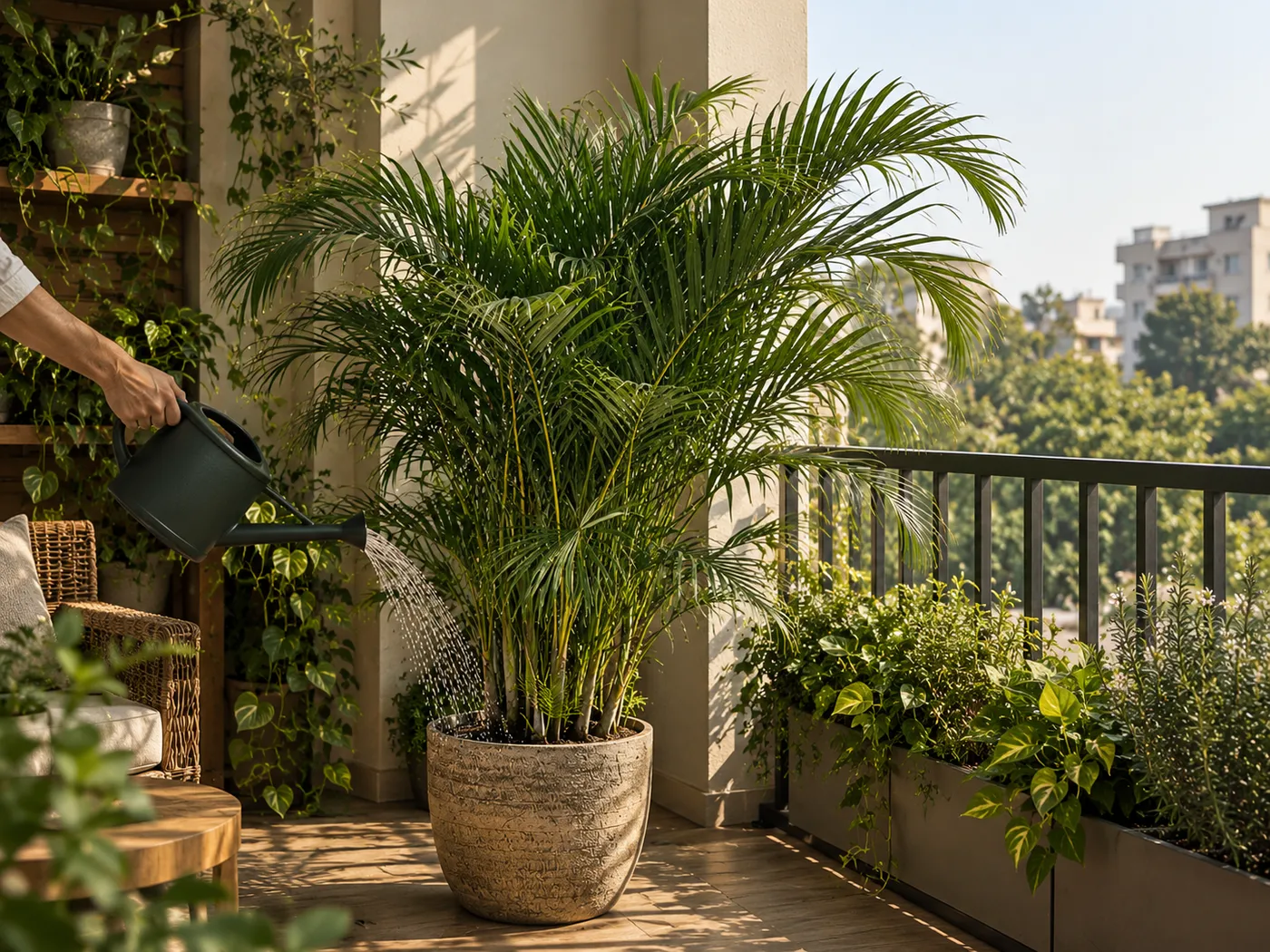
When you do water, water properly. Pour slowly until it runs out of the drainage holes, then stop. For a palm in a 12-inch pot that is usually two to three litres. Empty the saucer after half an hour; standing water keeps the bottom of the root ball wet and, on most balconies, becomes a mosquito problem by June. A deep soak every few days is far better than a small splash every morning.

What summer looks like in each city
In Delhi NCR, May and June bring the loo, a hot dry wind that pulls moisture from fronds faster than roots can replace it. Check daily, move the palm out of afternoon sun, and expect to water every one to two days. In Mumbai the heat is humid, so the mix dries more slowly; every three to four days is common. In Bengaluru summer is milder, but strong UV scorches fronds on open balconies, so shade matters more than extra water.
Brown tips on an otherwise green palm usually mean dry air or salt from hard tap water, not thirst. Flush the pot with a long, slow soak once a month and trim the tips with clean scissors.
Handing it over to house help
If someone else waters, give them the test rather than a timetable. Show them the finger check once, and ask them to water only when the mix is dry two inches down. Most people pick it up in a day. If the palm is on a drip line, check the pot yourself once a week, and shorten the run time as soon as the monsoon arrives. A palm that needed water every two days in May may need it once a week in July.