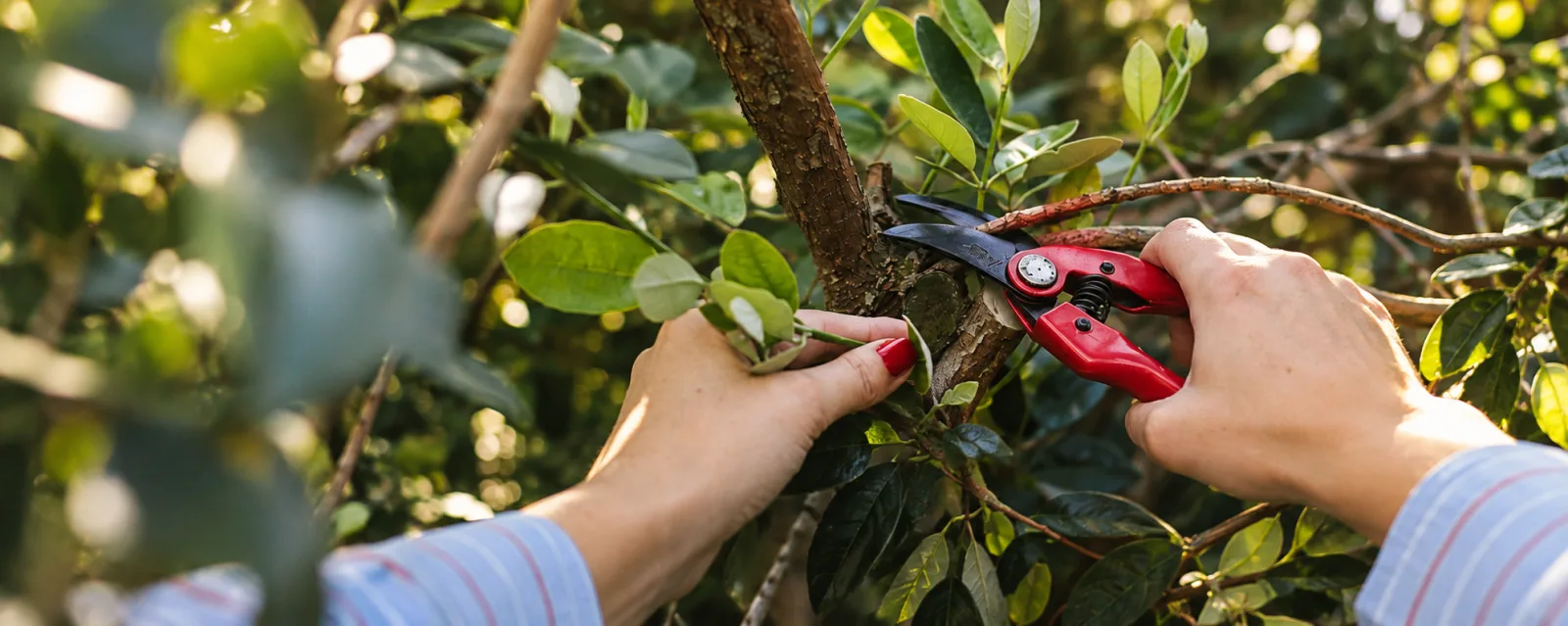
Most people are afraid to prune, and it shows on the balconies we visit: money plants with ten feet of bare vine and a few leaves at the end, hibiscus that are all stem, tulsi gone woody and thin. Pruning is not damage. A plant responds to a good cut by branching, filling out and flowering more. The rules are few, and once you know where to cut, you cannot go far wrong.
You will need
5 thingsWhy a cut makes a plant bushier
The growing tip at the end of each stem holds back the buds below it. Cut the tip off and the buds just beneath the cut wake up, so one stem becomes two or three. That is the whole principle behind pruning and pinching. It is why a hibiscus cut back in spring comes back fuller, and why a money plant trimmed regularly stays dense instead of trailing off into bare vine.
Where to cut
Always cut just above a node, the slight bump on the stem where a leaf joins it. Leave about half a centimetre of stem above the node, and angle the cut slightly so water runs off. Cut too far above and the leftover stub dies back and invites rot. Cut into the node and you remove the very bud you wanted to grow. Choose a node where the leaf points outward, so the new shoot grows out into the light rather than into the middle of the plant.
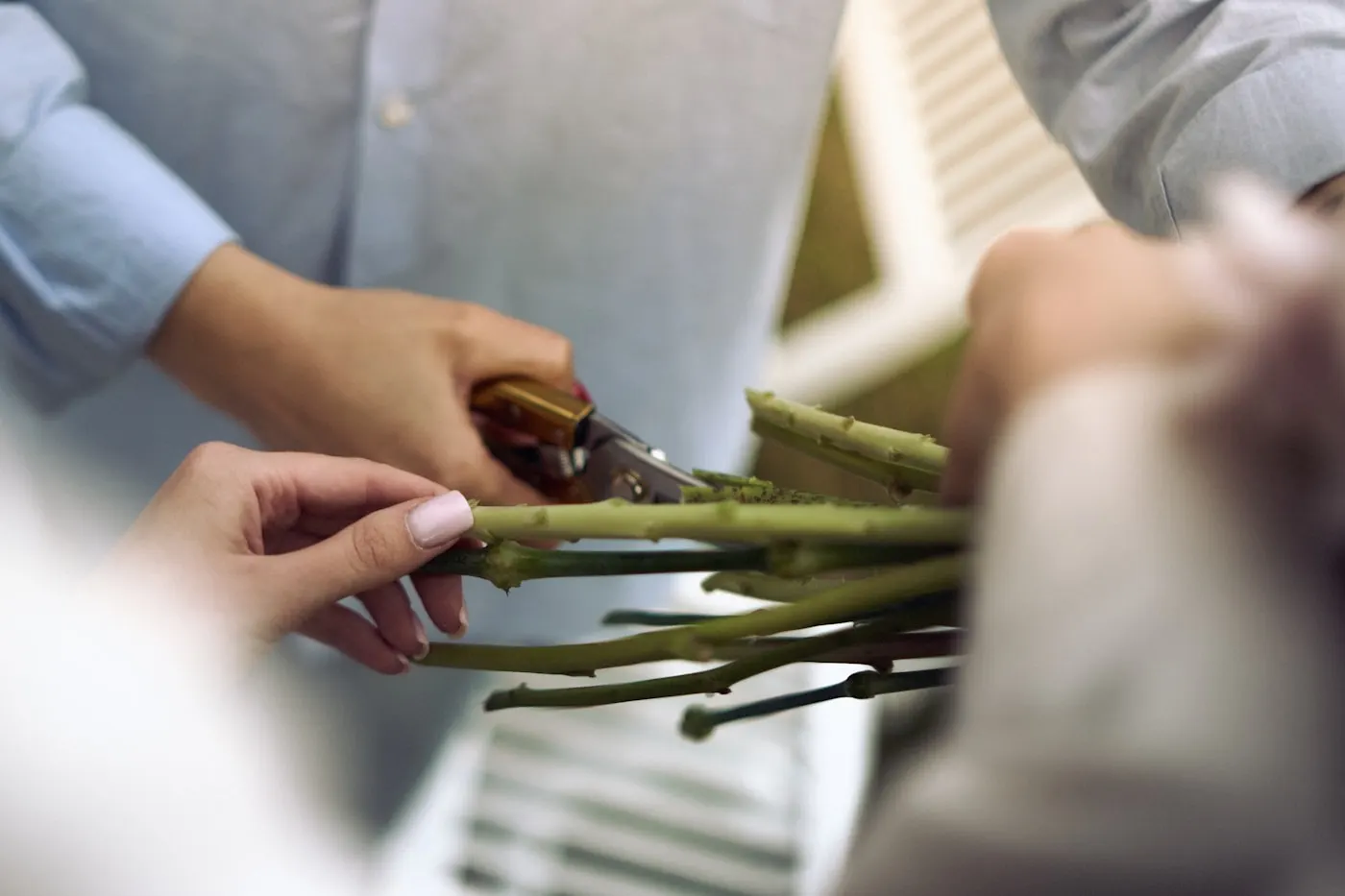
Start with the easy cuts. Remove anything dead, damaged or diseased, back to healthy green wood. Then take out stems that cross and rub against each other, and any weak, spindly shoots growing into the centre. Only then shape the plant. Often, by the time the first three jobs are done, very little shaping is needed at all.
When to prune
Flowering shrubs such as hibiscus, bougainvillea, ixora and mogra flower on new growth, so prune them just after a flush fades or at the end of winter, and new stems will carry the next round of flowers. Foliage plants can be trimmed any time they are growing well, from February to October. Avoid heavy pruning in the peak heat of May, when fresh cuts and newly exposed leaves scorch, and in a Delhi December and January, when a plant cannot regrow and cut stems may die back in the cold.
Never take more than a third of a plant at once. A plant needs its leaves to feed the regrowth; take too many and it has nothing to recover with.
Pinching soft growth
Pinching is pruning with your fingers. On soft-stemmed plants such as tulsi, mint, coleus, periwinkle and young money plant, nip out the tip of a stem just above a pair of leaves. Do it every week or two in the growing season and the plant stays compact without ever needing a hard cut. Pinch off flower spikes on herbs as they appear, unless you want seed. Money plant and pothos cuttings with two or three nodes root easily in a glass of water, so a trim can also give you new plants.
After pruning, water as usual and hold off on feeding for a couple of weeks, until you see new shoots. Wipe the blades with rubbing alcohol between plants, especially if one had pests or leaf spots, so you do not carry the problem to the next pot. Some plants, such as euphorbias and adenium, bleed a milky sap that can irritate skin, so wear gloves and keep it away from your eyes.