When a snake plant turns yellow, the owner almost always suspects a disease, a pest or too little fertiliser. In our experience it is nearly always water. Snake plants store water in their thick leaves and come from dry, stony ground. They are built to be forgotten, and kindness with the watering can is what kills most of them. In North India a cold snap does the rest. Here is how to tell which one you are dealing with.
Overwatering: the usual cause
Yellowing from overwatering starts at the base of the leaf, near the soil, and moves upwards. The leaf feels soft and slightly translucent where it has turned, and a badly affected leaf will fold over or come away with a gentle tug. Often the soil smells sour, and there may be a dark, mushy patch where the leaf meets the rhizome. If you see that combination, stop watering today.
The problem is usually three things together: a pot without a proper drainage hole, a dense mix that stays wet, and a watering routine borrowed from other plants. A snake plant on a weekly schedule, especially one watered by house help along with everything else, sits in wet soil most of its life. In the monsoon, when the air is humid and the light low, even fortnightly watering can be too much.

How to check the roots and rescue the plant
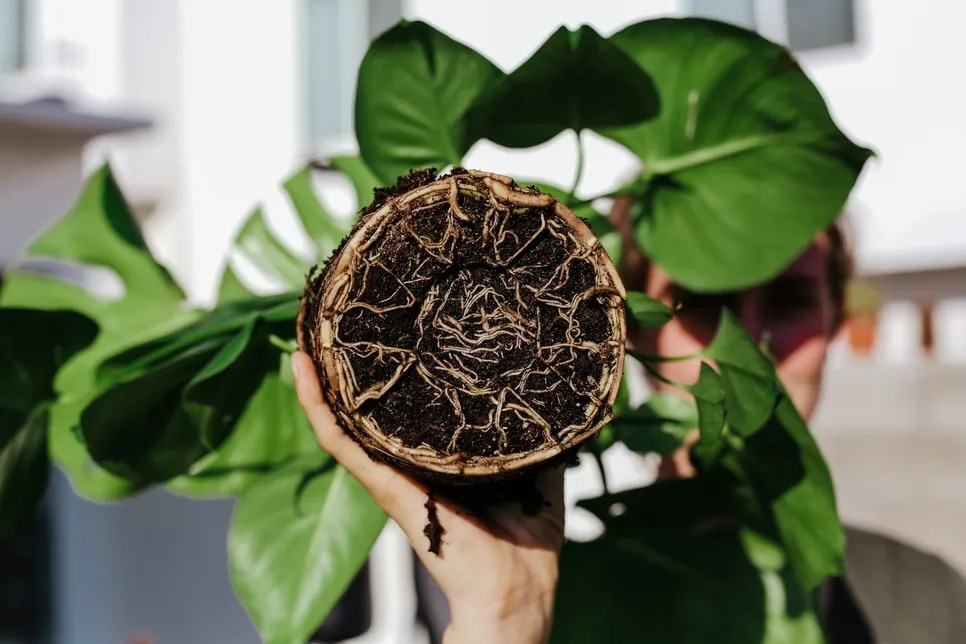
Tip the plant out of its pot and look. Healthy roots are cream to pale orange and firm. Rotten ones are brown or black, hollow, and come apart in your fingers. If more than half the roots are firm, you can usually save the whole plant. If the rot has reached the rhizome, save the healthy leaves instead: cut them into four-inch sections, let the cut ends dry for a few days and set them upright in a gritty mix to root.
Rescuing an overwatered snake plant
6 thingsCold: the Delhi winter problem
Snake plants dislike cold more than most people realise. Below about 10 °C the leaves can be damaged, and on a Delhi balcony in December and January, when nights drop to 4–6 °C, that happens easily. Cold damage looks different from overwatering: yellow or beige patches across the middle of the leaf, appearing within a few days of a cold night, that turn soft and then papery. Cold and wet soil together are the worst combination of all.
From mid-December to the end of January in Delhi NCR, bring snake plants indoors at night or push them against the inner wall, and water no more than once a month.
Rarely anything else
A single old leaf yellowing at the outer edge of the clump, while new ones come up from the centre, is normal ageing. A plant moved suddenly from a dim corner into full afternoon sun can bleach pale yellow on the side facing the light; move it back and let it adjust over two weeks. Occasionally a plant left in the same pot for years runs out of room and starts to yellow. Mealybugs are possible but uncommon, and they leave visible white fluff.
How to water from now on
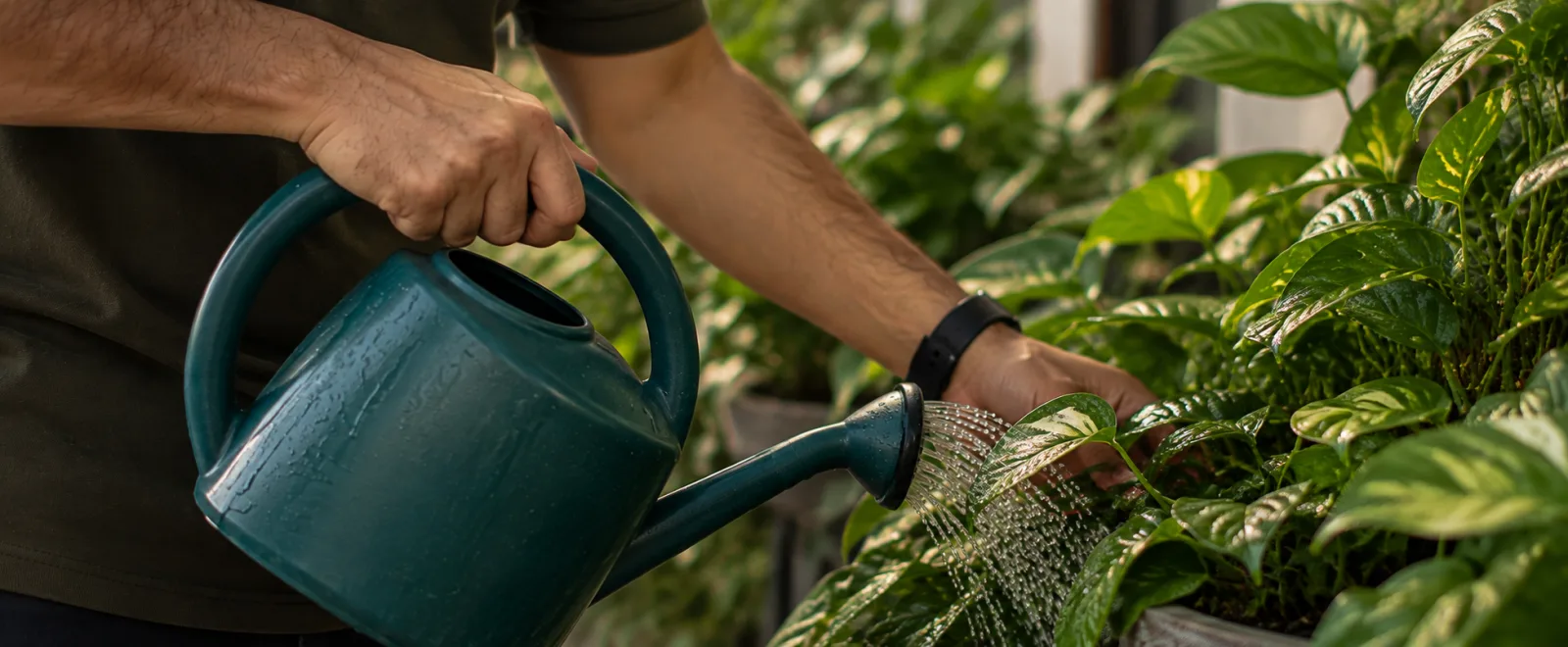
Water only when the soil is dry all the way down. Push a wooden skewer to the bottom of the pot; if it comes out with damp soil on it, wait. On most balconies that works out at every two to three weeks in summer, three to four weeks in the monsoon and once a month or less in winter. Use a terracotta pot if you can, because it dries faster than plastic, and never leave the pot standing in a saucer of water.