Biophilic design sounds like something that needs a green wall and an architect. It does not. The idea is simply that people feel better in rooms that bring in the things we grew up around as a species: daylight, living plants, natural materials and a view out. You can get a long way in a rented flat without spending much. Here are seven changes we suggest to clients, ranked from free to about ₹5,000, with rough costs from local nurseries and markets.
The seven ideas, ranked by cost
7 thingsFree and nearly free
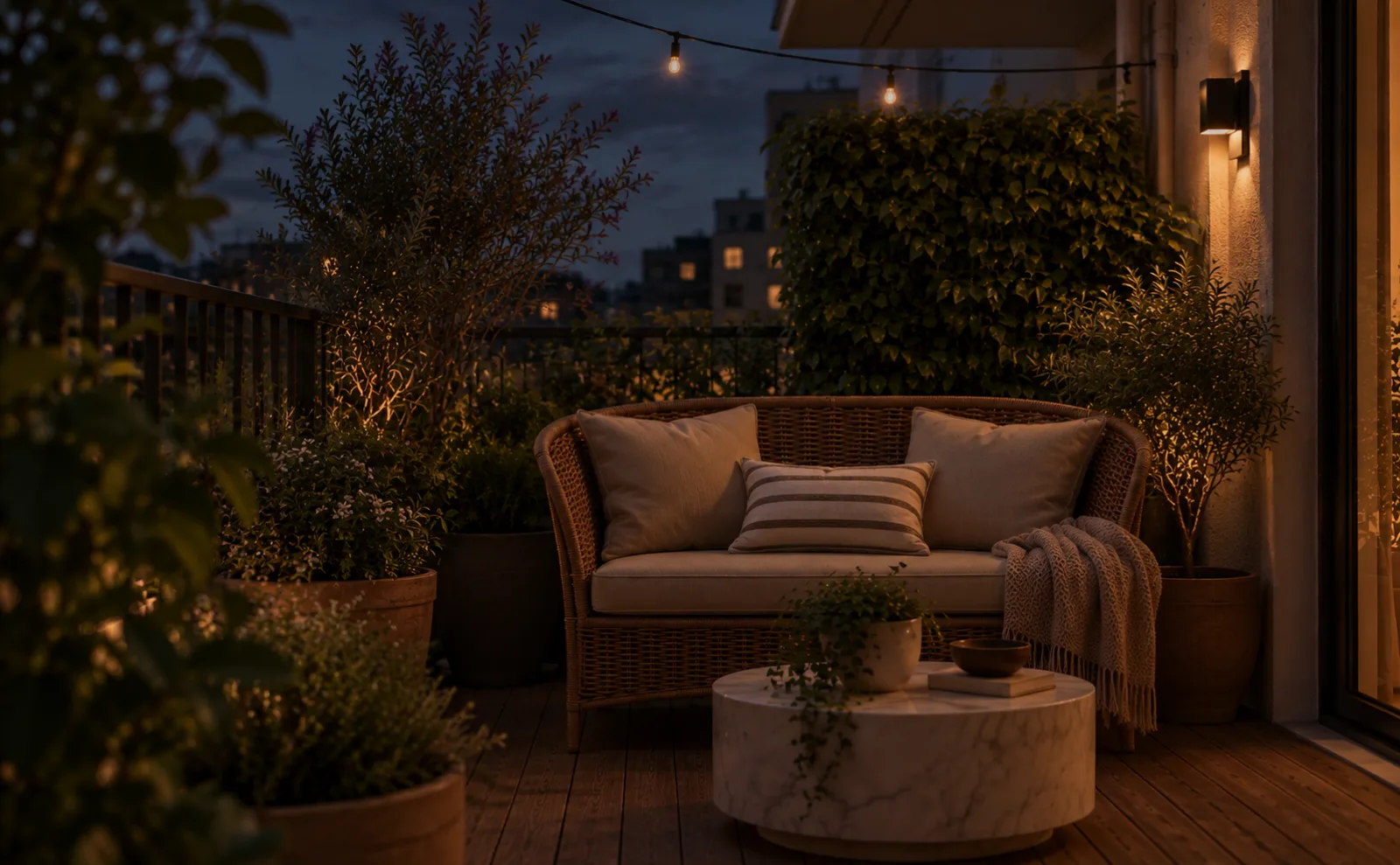
Idea one costs nothing. Turn your main chair or desk so it faces the window or balcony door instead of the wall. A view of sky and greenery is the cheapest biophilic element there is, and most living rooms are arranged around the television instead. Idea two is nearly free: take cuttings from a neighbour's money plant and root them in clear glass bottles along a sill. Watching roots grow in water is oddly satisfying, and the bottles look good in a row.
Before buying anything, sit in the room at 5 pm and notice where your eye goes first. That is where the first plant belongs.
Light, pots and a shelf
Idea three is light. Swap cool white bulbs used in the evening for warm-white ones, around 2700 K, and add a string of warm lights near your plants. It costs ₹500–₹1,500 and changes how a room feels after dark more than anything else here. Idea four is terracotta. Three medium terracotta pots from a local potter, at ₹800–₹1,500 for the set, make the plants you already own look deliberate rather than temporary, and they breathe better than plastic.
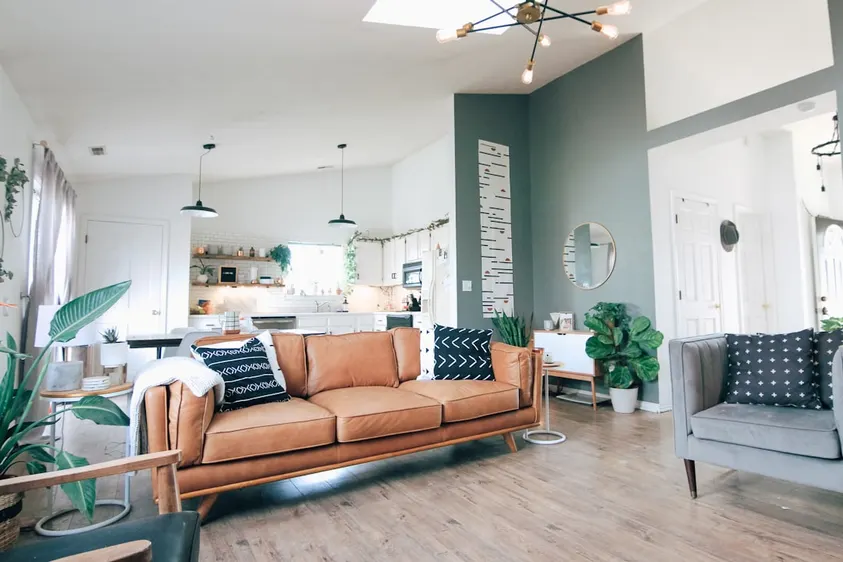
Idea five brings plants up to eye level. A wall shelf near a window with a pothos or heart-leaf philodendron trailing from it, at ₹1,500–₹2,500 for shelf, planter and plant together, draws the eye upwards and makes a small room feel fuller without taking any floor space. Pothos is forgiving across a wide range of light, and it roots easily if you want more later.
Texture and one big plant
Idea six is texture. One natural-material piece, such as a jute or cotton dhurrie, a cane or seagrass basket for a floor plant, or a set of cane blinds, costs ₹1,500–₹3,000 and softens a room full of vitrified tiles and laminate. Idea seven is the largest spend and the biggest change: one tall floor plant. A rubber plant or bamboo palm at four to five feet, in a decent pot, costs roughly ₹2,500–₹4,500. Place it where it catches the eye from the door.
Where to start, and what to skip
If you can only do one thing, do idea one today and idea seven next month. A clear view out and one plant with real presence change a room more than a dozen small pots scattered around it. Then add warmth with light and texture. Everything on this list moves with you when you change flats, which matters in cities where most people rent.
What we would not spend on: artificial plants, which gather dust and never change; preserved-moss panels, which look tired within a year in humid cities; and big sets of tiny succulents for indoor shelves, which rarely get enough light inside and slowly stretch and fade. Spend the same money on one real plant in the right spot.