What will it cost? It is the first question on almost every call we take, and the honest answer, it depends, is not much use on its own. So here are the actual bands we price makeovers in, and the things that move a project from one band to the next. Every band below is quoted before GST; add 18% for the amount you will pay. Maintenance is separate, charged per visit, and not covered here.
The five plan bands
Our makeovers fall into five plans. At the lower end, Refresh is mostly about plants, planters and soil on a balcony you already like. As you move up, flooring, seating, lighting and irrigation come into the design, and the plants themselves get larger. The upper bands are usually for bigger balconies, terraces and courtyards. Here are the figures, with GST worked out so there are no surprises.
The bands, before GST and with 18% GST
5 thingsThe bands overlap with real life more than the neat numbers suggest. Two balconies of the same size can land in different bands because one owner wants a timber deck and a swing and the other wants a dense green screen and nothing else. The band is set by what goes in, not by the address or the floor. Where a design sits near the top of one band, dropping one or two items is usually enough to bring it into the band below.
Area comes first
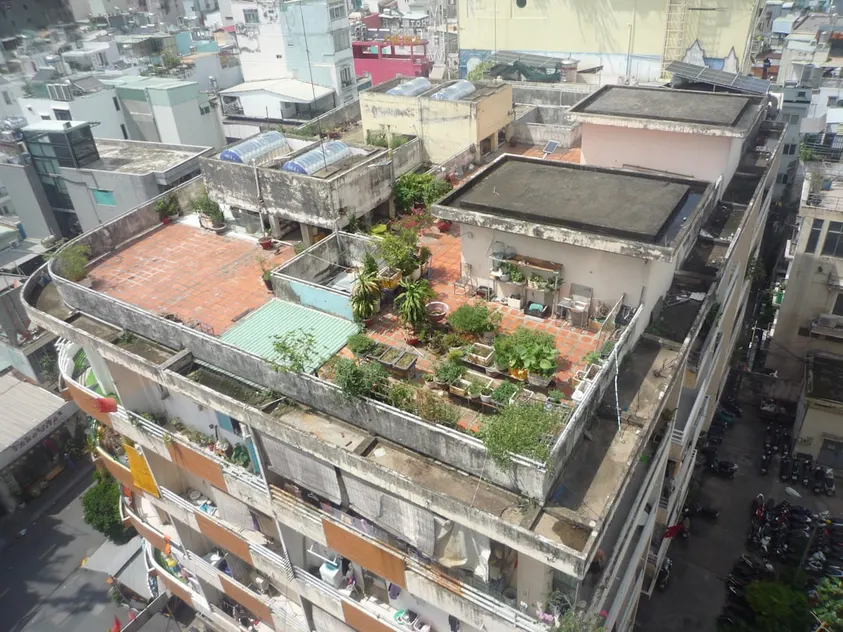
Size is the biggest single factor. A 40 sq ft balcony and a 400 sq ft terrace are different projects, not a smaller and larger version of the same one. More area means more flooring, more planters, more soil and more plants. On a terrace it often also means checking waterproofing and thinking about weight on the slab. As a rough guide, most compact city balconies sit in the lower three bands, and terraces usually start at Premium.

What moves the number
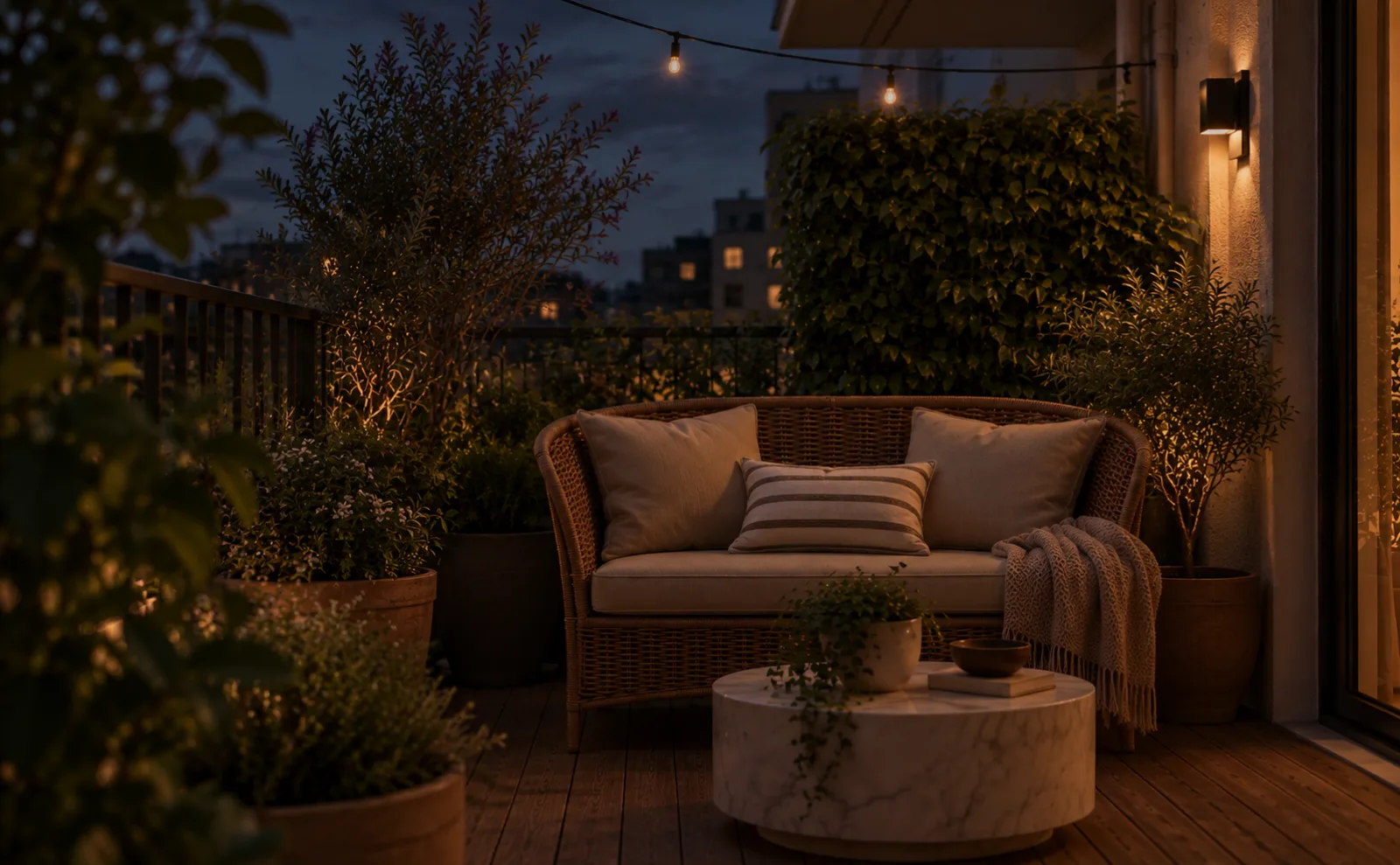
After area, flooring is usually the largest line. Interlocking deck tiles laid over existing tiles cost far less than a timber deck on a frame, with artificial grass somewhere between. Furniture comes next: a pair of folding chairs and a small table is a different budget from a built-in bench with cushions. Lighting ranges from a plug-in festoon string to wired wall lights and uplights, which need an electrician.
Irrigation adds cost up front and saves plants later. A drip line on a timer is worth it for anyone who travels or relies on house help to water. Plant size is the factor people most often underestimate. A 6-foot areca palm or olive costs many times what a 2-foot one does, and it needs a larger, heavier planter too. Where a big plant will not fit in the lift, a smaller one grown on for a year or two is often the better buy anyway.
If the budget is tight, spend it on good planters, good soil and the right plants first. Furniture and lighting can be added next year; poor pots and the wrong plants cannot be fixed later without starting again.
Planning your budget
Start with how you want to use the space, not with a number. Morning tea for two, a green screen from the neighbours, somewhere for children to play, a herb corner. Then work out which of the cost drivers that use actually needs. Many people find a Refresh or Essential scheme does everything they wanted, and the decking they had in mind can wait. Ask for a line-by-line quote so you can see exactly what moves the total, and check whether the figure you are looking at includes GST.